
Vintage Art Explained: Style Your Home with Timeless Charm
Key Takeaways
- Vintage art generally refers to original works created 20 to 100 years ago, while antiques are 100+ years old and retro is new work inspired by older styles;
- Defining eras include Art Deco, mid-century modern, Pop, and Minimalism, each with distinct color, materials, and cultural stories;
- The appeal of vintage artwork comes from narrative, sustainability, and how easily it pairs with modern home decor for timeless depth;
- You can create a vintage look with your own photos, apply retro edits, then hang damage free using Mixtiles’ adhesive, repositionable frames.
Vintage art carries history, emotion, and unmistakable style into today’s homes. But what is vintage art, exactly, and how does it differ from retro or antique pieces? In this guide, we define vintage art, spotlight the key eras and traits that shape it, and explain why it still resonates in modern interiors. You will also get simple, renter friendly ways to build a vintage inspired gallery wall using your own photos and prints, no nails needed, so you can create a meaningful display in minutes.
Ready to create a vintage inspired look? Explore our gallery walls for ideas, then design your own in minutes. Upload photos, apply retro edits, and hang with damage free, repositionable photo tiles.
What is vintage art?
When people ask what is vintage art, the simplest answer is this: original art or art prints created roughly 20 to 100 years ago that reflect the aesthetics and culture of their era. Age alone is not enough. Vintage pieces show era specific techniques, materials, and stories. You will encounter vintage and antique posters, paintings, photography, travel ephemera, and fine art prints that still feel fresh in a modern home.
How is vintage different from retro and antique?
Vintage means original work made in its time, often mid 20th century through late 20th century. Antique art is 100 years old or more, so it belongs to an earlier period and often features rarer materials and hand craftsmanship. Retro describes new items made now that imitate older styles. Knowing these differences helps you style confidently, understand value when you shop, and tell a clear story in your decor with both vintage and antique pieces.
Which eras and styles define vintage art?
Several 20th century movements shape the look of vintage artwork. Here is a quick at a glance guide before we explore highlights.
|
Style or Era |
Typical Markers |
Great In Your Home |
|---|---|---|
|
Art Deco, 1920s–1930s |
Geometric forms, metallic accents, bold type |
Glam accents over sideboards or entryways |
|
Mid-century modern, 1950s–1960s |
Clean lines, organic shapes, abstract motifs |
Easy pairing with contemporary furniture |
|
Pop Art, 1960s |
Bright color, icons, playful graphics |
Statement pieces for living rooms or studios |
|
Minimalism, late 1960s–1970s |
Restraint, negative space, texture |
Calming bedrooms and work zones |
Art Deco (1920s–1930s)

Art Deco posters and fine art prints feel glamorous thanks to geometry, symmetry, and metallic inks. Think travel ads for ocean liners or a vintage Hong Kong destination poster for worldly flair.
Mid-Century Modern (1950s–1960s)

Mid-century modern embraces warm woods, earthy palettes, and abstract forms. These pieces blend beautifully with today’s sofas and dining sets for a cohesive, new-meets-old look.
Pop and Minimalism (1960s–1970s)

Pop brings color and fun, while Minimalism brings calm and clarity. Mix them to balance energy and serenity in your collection.
Vintage photography and travel posters

Film grain, sepia, and classic typography deliver instant nostalgia. A set of 1960s city prints can anchor a gallery wall with story and style.
If you are choosing art for a specific room, this guide on how to choose wall art will help you match style, palette, and mood to your space.
Why does vintage art still look amazing in modern homes?
Vintage art adds narrative and conversation value that mass produced decor cannot match. The visual contrast of time softened textures beside sleek furniture creates depth without clutter. Choosing antique and vintage pieces or digitizing heirlooms is also sustainable, since you reuse existing work. Most of all, a curated collection feels personal, from an original sketch by an unknown artist to reprinted art prints that echo memories from a travel photo book.
Turn your memories into vintage inspired wall art. Transform your favorite photos to canvas for a textured, artistic feel. Upload your images, add a retro vibe, and hang instantly with our adhesive frames, no nails or damage.
How can you get the vintage look with your own photos?
You can transform family snapshots into vintage artwork that fits right in with antique and vintage finds. Here is how to start, from scan to display.
Digitize and restore
Scan prints at high resolution to preserve detail. Clean minor dust and scratches, but keep the film character that gives photos their 20th century charm.
Apply vintage-inspired edits
Use simple edits to create a period feel:
- Film grain and soft contrast for a classic analog look;
- Sepia, monochrome, or muted palettes for instant nostalgia;
- Subtle paper textures or white borders to mimic darkroom prints.
Curate like a pro
Mix personal photos with public domain posters or illustrations to build a cohesive story. Balance themes like travel, botanical, architecture, and abstract so your home decor feels intentional and new to you, yet grounded in an older era.
What’s the easiest, renter friendly way to display vintage style?
Plan a layout, pick frames that suit the art, then hang without holes using Mixtiles’ stick and restick system. You can rearrange as your collection grows.
Plan your gallery wall
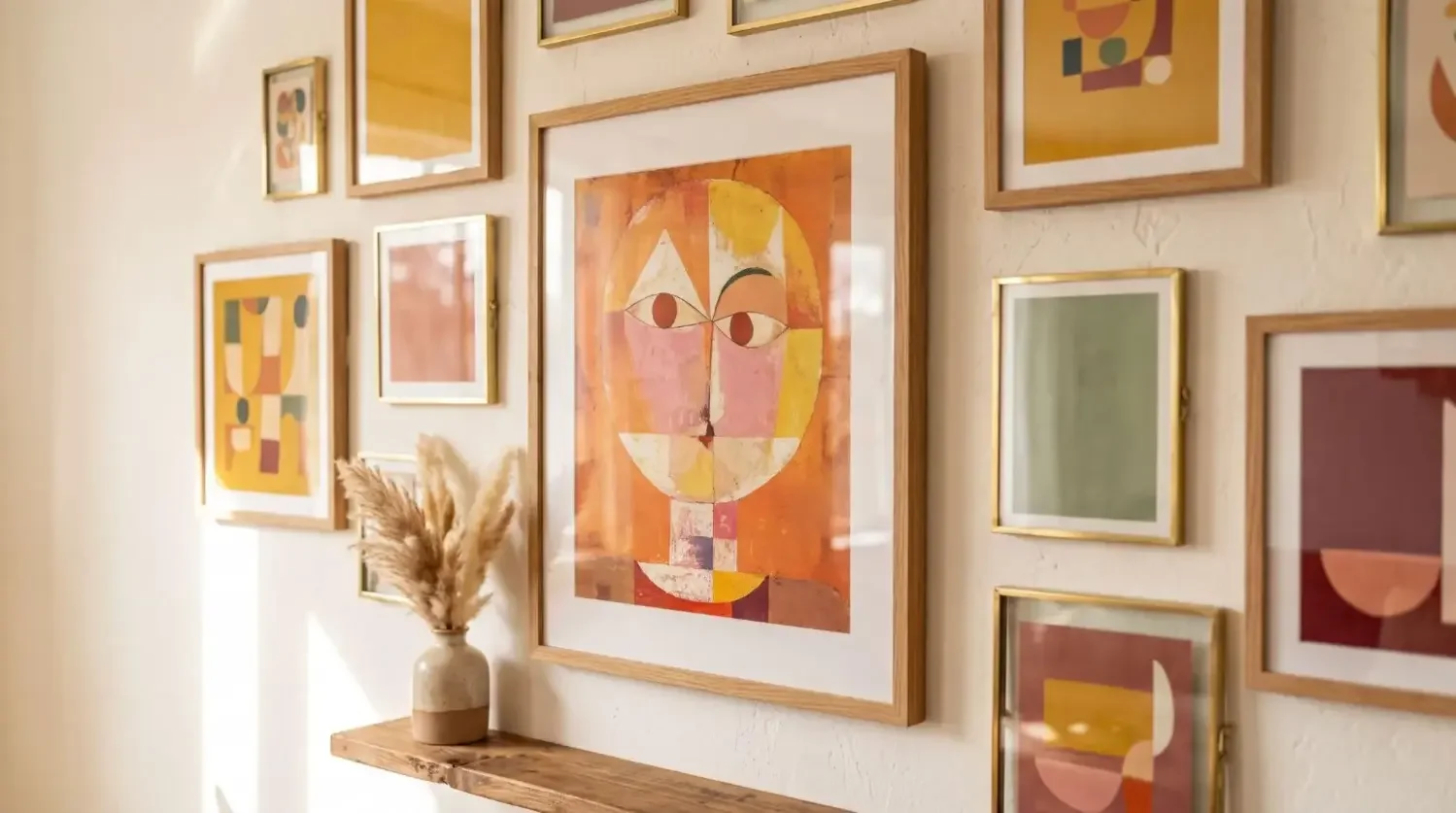
Plan your gallery wall. Start with one hero piece, then echo its palette across smaller tiles. Keep spacing consistent so the whole arrangement reads as a single work of art. For proportions by room and furniture, consult our wall art size guide. If you prefer a collected, salon-style look, see how to arrange art on a wall for layouts that feel intentional.
Choose frames thoughtfully
Black, walnut, or soft gold frames pair well with most eras. Keep mats simple so originals and custom canvas prints stay center stage.
Hang without holes
Follow these quick steps for a flawless install. Renters can also follow our tutorial on how to hang wall art without nails for extra tips.
- Wipe the wall clean to remove dust;
- Arrange tiles on the floor to finalize spacing;
- Peel, stick, and straighten each tile, then restick as needed.
Quick checklist
- Pick an era palette that ties pieces together;
- Mix originals, reprints, and your restored photos;
- Edit photos with a subtle vintage vibe;
- Add to your shopping cart, then print with Mixtiles and refine on the wall.
Now that you can answer what is vintage art, you are ready to curate with confidence. Blend mid-century modern abstracts, travel posters, and restored family photos into a personal collection that feels timeless. Mixtiles makes it easy with an intuitive service, fast ordering on the web or app, and damage free, repositionable frames. If you need help, our customer service team is here.
Create your vintage inspired wall today. Upload your photos to Mixtiles and get beautiful, adhesive frames delivered to your door.
Frequently Asked Questions
What does vintage art actually mean?
Vintage art refers to original works or prints created roughly 20 to 100 years ago. Beyond age, it captures the materials, techniques, and culture of its time. Pieces over 100 years are antique. New works that imitate older styles are called retro.
What defines the vintage art style?
Vintage art style spans posters, paintings, photographs, and illustrations that mirror their period’s trends. Expect era specific palettes, typography, and textures, from Art Deco geometry to mid century organic forms. The look feels nostalgic, yet pairs easily with contemporary interiors and furniture.
How old must art be to be considered vintage?
Most experts consider art vintage when it is 20 to 100 years old and clearly reflects its era. At 100 years or more, a piece is antique. If something is newly made but channels older aesthetics, it is retro rather than vintage.
Can making or viewing art boost your mood?
Yes. Creating art can reduce cortisol, and may increase feel good chemicals like dopamine, serotonin, oxytocin, and endorphins. Viewing and curating art at home often improves mood. Displaying pieces you love with Mixtiles is an easy, damage free way to enjoy daily uplift.

Be the first to know — deals, news & decor ideas.
By clicking you agree to the Terms of Use & Privacy Policy