
Retro Art Explained: Styles & Tips for Your Home
Key Takeaways
- Retro art reimagines design cues from roughly the 1920s to the 1990s. Think bold color, geometric shapes, vintage typography, neon, and popular culture references;
- Retro vs vintage: vintage is authentically old, retro is new work inspired by older eras; both are nostalgic but differ in age and authenticity;
- Today’s popular retro styles include mid‑century geometrics, pop art, Bauhaus collages, 70s psychedelics, 80s neon, vaporwave, and grunge or VHS textures;
- You can create retro‑style art at home using Mixtiles, adhesive and repositionable photo frames that make gallery walls simple to design and refresh.
Retro art celebrates the past while feeling fresh in the present. From Art Deco lines and mid‑century geometrics to 70s psychedelics and 80s neon, it borrows the most iconic visual cues from earlier decades and reimagines them for today. In this guide, we answer what is retro art, how it differs from vintage, the eras and styles that shape it, and simple ways to style it at home. You will also see how to turn your photos into retro‑inspired Mixtiles.
Create a retro-inspired gallery wall in minutes. Turn your photos into stylish photo tiles, design your layout on our website, and stick them up, no nails needed.
What is retro art?
Retro art is a modern design style that imitates visual elements from past times, often used to bring a nostalgic mood into a modern interior. The word retro comes from Latin (meaning back or past) and designers use it to describe new pieces that echo older eras.
Bold palettes and high-contrast duotones
Expect saturated colors, blue and teal accents, hot pinks, and bold and eye-catching duotone treatments that make any poster or image pop in a living room.
Geometric shapes, playful patterns, and vintage typography
Clean lines, circles, arches, and starbursts meet period type: think Bauhaus fonts, Art Deco letterforms, or chunky 70s scripts used across posters and art prints.
Pop culture nods (posters, ads, album art) reimagined
Designs draw from movie posters, magazine covers, food packaging, and American commercial art, then modern artists remix them for a new age.
Primarily 1920s–1990s influences with a modern twist
From Art Nouveau and Art Deco to Pop Art and early digital, retro art pulls forms and materials from many eras, then updates them using today’s graphic design tools.
How did retro art evolve across decades?
It grew as a series of revivals. Designers often revisit an era’s visual language, then create something modern with it. Below are the milestones that still influence interiors today.
1920s–30s: Art Deco and Bauhaus (streamlined geometry, functional design)

Deco introduced symmetry, metallic accents, and stepped forms. Bauhaus favored geometric shapes and functional simplicity, influencing modern design style worldwide.
1950s–60s: Mid-century modern and Pop Art (clean lines, halftones, comic styles)

Post World War II optimism led to clean lines and minimalist furniture. In New York and London, Pop Art used dots, poster edges, and everyday imagery to critique popular culture.
1970s: Psychedelic posters and groovy gradients (warped type, saturated hues)

Concert posters used warped typography, solar flare gradients, and organic forms. The vibe feels handcrafted and free, perfect for a warm interior design palette.
1980s–90s: Neon, Memphis, VHS, and grunge (electric colors, noise, texture)

Memphis patterns, synthwave grids, LED‑like glow, and VHS noise appeared. Later, grunge textures and distressed materials created an edgy art style seen across album covers.
What’s the difference between retro and vintage art?
Vintage or retro can sound similar, yet they differ. Vintage pieces were made in the era itself. Retro design is recent, created now but inspired by the past.
- Authenticity: vintage is original to the era; retro is new but references it: A vintage style poster printed in the 70s is original. A retro poster created today with 70s shapes is inspired by that era.
- Materials and methods: aged originals vs contemporary production: Vintage may show natural wear and older inks. Retro uses modern printing and clean finishes, often on new materials designed for longevity.
- Mood and intent: preservation vs playful reinterpretation: Vintage preserves history. Retro plays with history to make a modern piece that still feels nostalgic.
- When to use each in your decor: Choose vintage when you want a one‑of‑a‑kind artifact. Choose retro when you want consistent sizes, colors that match your space, and a cleaner look.
Which retro art styles are trending right now?
The big resurgence includes minimal geometrics and expressive color. These trends are easy to mix, so you can get started with one print or build a large gallery.
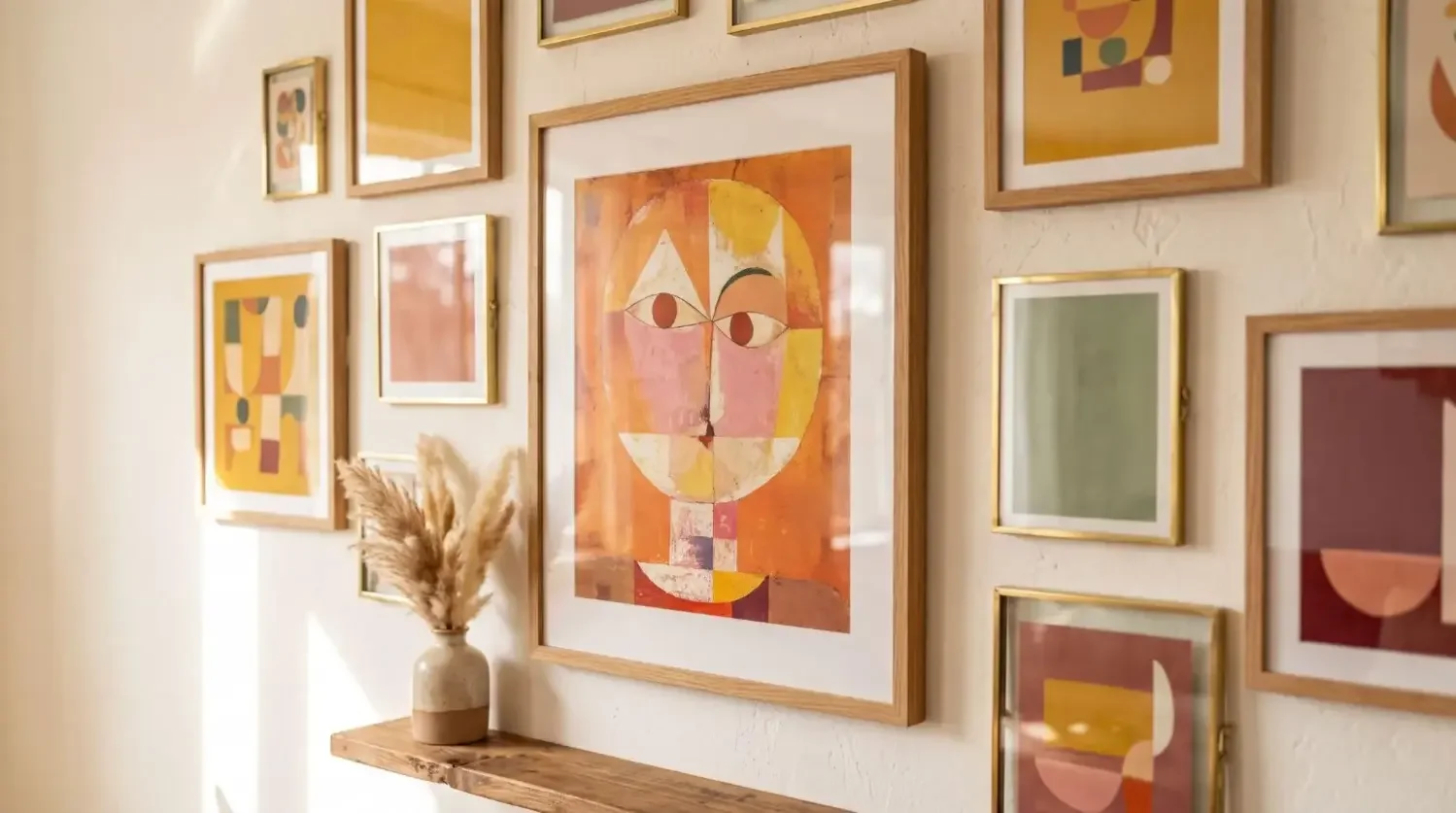
Mid-century geometrics and minimalist Bauhaus collages
Simple grids, circles, and primary colors make a casual, modern statement that always looks clean.
Pop art portraits and bold poster typography
High contrast, halftone dots, and witty type bring energy to any page or wall, often used in social media‑ready rooms. You can even create your own Pop art portraits, like a fun ai dog portrait, to capture the vibe.
Vaporwave/synthwave gradients, grids, and retro-tech motifs
Think neon sunsets, pixel art, and early computer forms that feel playful and futuristic at the same time.
Grunge/VHS overlays for nostalgic texture
Light noise, scan lines, and faded edges add mood to a photo or graphic, great for a hallway with low light.
Test-drive a retro look with zero commitment. Print your designs on our custom canvas prints. They're adhesive, removable, and easy to rearrange until your wall feels just right.
How do you style retro art in a modern home without overdoing it?
Start small, then build. Pick two or three colors, repeat simple geometric shapes, and keep furniture lines clean so the art and design can shine.
Color palettes that click
Mid-century warms: mustard, burnt orange, avocado, teal
These hues match wood tones and soft textiles, the perfect way to add warmth without visual clutter.
80s neons: hot pink, electric blue, lime, purple
Use sparingly as accents so the room stays balanced. One neon poster can become the focal point.
Layout and scale
Grid walls for geometric balance; large focal pieces for impact
Grids echo retro order, while a single large poster creates a confident centerpiece. To plan a grid accurately, consider the common Mixtiles sizes below.
|
Advertised Size |
Actual Size (inches) |
Actual Size (cm) |
|---|---|---|
|
8 × 8 |
8.4 × 8.4 |
21.35 × 21.35 |
|
12 × 12 |
12.44 × 12.44 |
31.6 × 31.6 |
|
12 × 16 |
12.44 × 16.44 |
31.6 × 41.75 |
Want extra help picking sizes and spacing for your room? Use our wall art size guide and learn how to arrange an art wall step by step.
Mixing eras and finishes
Blend retro prints with modern furniture and neutral walls
Clean walls let patterns breathe. Mix a Bauhaus collage with a Pop Art piece to keep the display creative and cohesive.
Room-by-room ideas
Living room: statement triptychs and grid galleries
Line up three related designs for symmetry. Use our Gallery Wall Kits to keep spacing consistent.
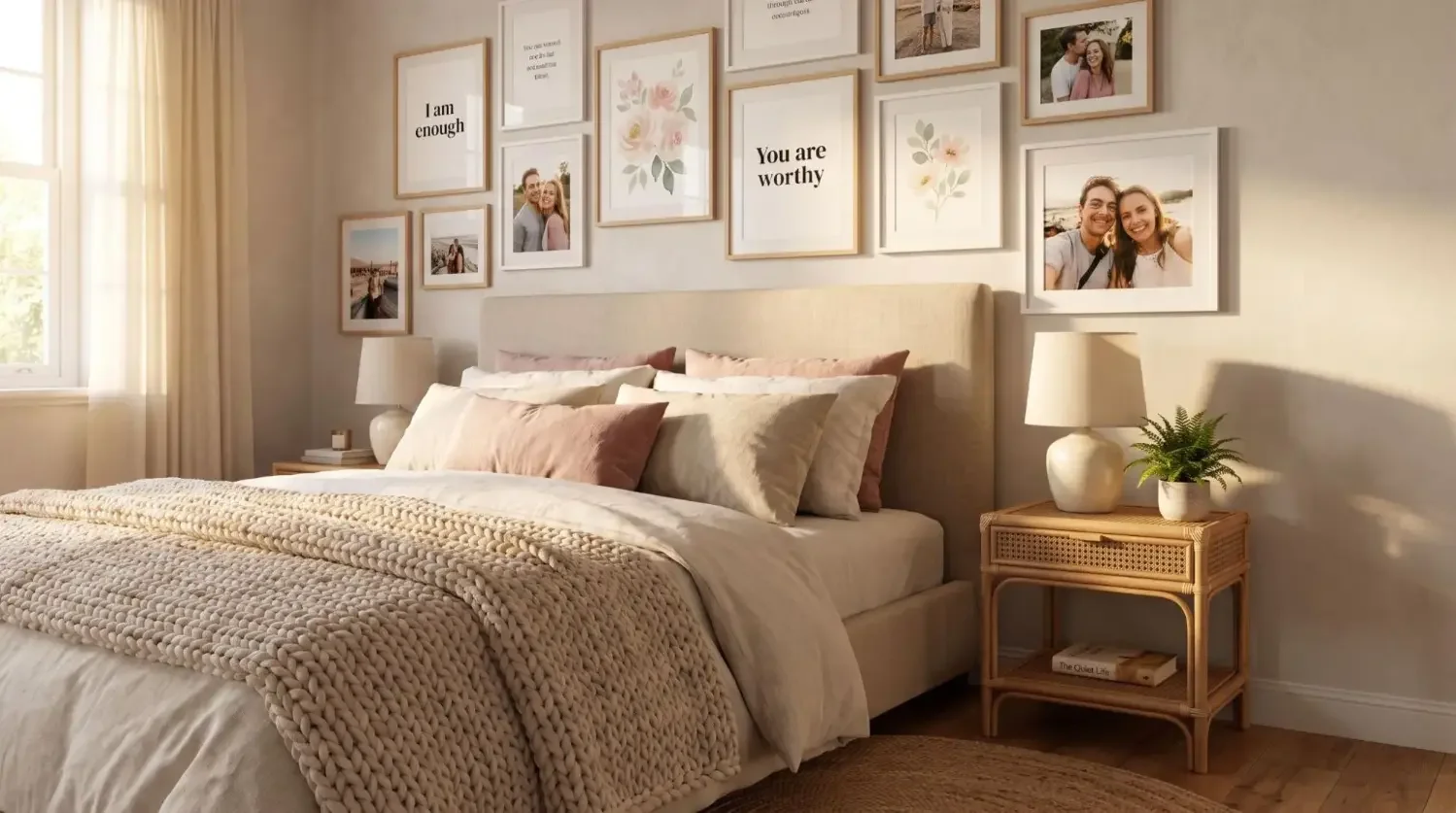
Bedroom: softer palettes, abstract shapes, calming gradients
Choose gentle forms and fewer colors for a restful look that still feels retro.
Office/hallway: motivational retro typography and arrowed wayfinding vibes
Vintage typography and clean arrows create flow and keep energy high in transitional spaces. For layout inspiration that fits tight corridors, explore our hallway gallery wall ideas.
How can you turn your own photos into retro art with Mixtiles?
You only need a favorite image and a style reference. Edit lightly, pick a frame, and your custom retro design is ready to hang.
Easy edits that add instant retro vibes
Filters and textures: grain, halftone dots, sepia, duotone, VHS lines
Add subtle grain for an old film feel. Duotone colors or VHS scan lines bring a 70s or 80s mood to a modern photo.
Shapes and type: circles, arches, starbursts, vintage fonts
Overlay geometric shapes and era‑true typography. This turns a simple photo into a retro poster that feels designed.
Series ideas: color-themed sets, decade-inspired grids, album-cover looks
Create one tile per era or keep one color across all tiles for visual unity in your gallery.
Why Mixtiles are perfect for retro walls
Repositionable adhesive frames, no nails, no damage
Stick, adjust, and restick as trends evolve. Our adhesive is strong yet gentle on most surfaces. See our guide to hang wall art without nails for more tips.
Consistent sizing for crisp mid-century-style grid layouts
Matching formats make alignment simple. Use a level for museum‑clean lines.
Order from your phone; refresh styles seasonally without the hassle
Upload, crop, and preview in minutes. Choose framed, frameless, wide frame, or canvas prints online that fit your interior.
Retro art is a vibrant bridge between past and present, pulling in Art Deco elegance, mid‑century clarity, 70s psychedelia, and 80s neon energy to create walls with character. Now that you understand what is retro art, how it differs from vintage, and which styles match your home, you can design with confidence. Start with colors you love, pick a design style that fits your space, and build a layout that tells your story.
Ready to go retro? Turn your photos into a stunning photo gallery wall, or create a unique AI family portrait with a vintage twist. Start your retro wall today in the Mixtiles app or on our website.
Frequently Asked Questions
What styles are considered retro today?
Retro today includes Art Deco symmetry, Bauhaus function, mid-century geometrics, 70s psychedelics, 80s neon and Memphis patterns, plus early digital looks like vaporwave. Expect bold palettes, clean shapes, vintage-style typography, and pop culture nods, reimagined with modern tools for fresh, nostalgic decor.
What does retro mean in art and design?
Retro in art means work made now that references older eras. Designers borrow colors, type, patterns, and motifs from decades like the 50s through 90s, then execute with current tools and materials. It differs from vintage, which is an authentic piece produced in its original time.
Are the 70s considered retro or vintage?
It depends on context. Objects produced in the 1970s are vintage. New items that mimic 70s looks, such as groovy gradients, earthy palettes, and chunky type, are retro. For decorating, retro delivers consistent sizes and crisp finishes, great for easy gallery walls with Mixtiles.
How is retro different from vintage?
Vintage is original to the era and often shows age. Retro is newly made, inspired by a past style. Choose vintage for one-of-a-kind history. Choose retro for color control, repeatable sizes, and simple updates, for example by turning your photos into adhesive, repositionable Mixtiles.

Be the first to know — deals, news & decor ideas.
By clicking you agree to the Terms of Use & Privacy Policy