
Japandi Wall Decor Ideas: Create a Calm, Minimal Home
Key Takeaways
- Japandi wall decor blends Japanese minimalism and Scandinavian warmth through neutral palettes, natural materials, and intentional negative space;
- Go big but quiet: choose minimalist, nature-inspired wall art, and use balanced grids or linear layouts to ground your interior;
- Limit colors, vary textures, and scale art to furniture for clean lines that feel serene in any living room or bedroom;
- Mixtiles’ lightweight, adhesive, repositionable frames make it easy to create and refine Japandi walls without nails or damage.
Japandi wall decor is the sweet spot between Japanese restraint and Scandinavian coziness. Think soft neutrals, warm wood, and art that whispers. If you want a home that feels calm but never cold, these japandi wall decor ideas will help you choose the right colors, materials, layouts, and art, then put it all up with zero stress. Whether you are styling a studio or a family home, you will find simple, balanced ways to make your walls feel intentional and serene.
Create a Japandi-inspired gallery in minutes. Turn your photos into beautiful custom canvas prints on our website. Our popular 12x12 canvas prints are perfect for creating a balanced triptych. Just pick a frame, stick it to your wall, and reposition anytime without nails or damage.
What is Japandi wall decor, and why does it feel so calming?
Japandi blends Japanese minimalism with Scandinavian design, so your space feels quiet, functional, and warm. You emphasize fewer pieces, better quality, and generous negative space. Natural materials, soft color, and clean lines create a balanced interior that looks modern and feels restful.
Which colors and materials define Japandi wall decor?
Japandi interiors revolve around neutral tones and tactile finishes. The goal is understated elegance that supports life’s daily rhythm without overwhelming your senses.
The Japandi color palette
Start with white, beige, greige, stone, and clay, then layer in charcoal or sage for gentle depth. Keep contrast soft. Pair warm whites with walnut or black accents so your wall art reads calm but not flat. Muted color palettes are best, and a hint of green from plants helps the room feel alive and natural.
The go-to materials
Choose natural materials like wood, linen, wool, cotton, clay, and stone. Oak, ash, or walnut introduce warmth. Matte finishes and paper textures suit minimalist art prints, line drawings, and abstract art. Cane, rattan, and rice paper add subtle pattern without clutter.
How do you choose wall art for a Japandi look?
Pick pieces that echo nature and simplicity. Japandi wall art often features abstract shapes, minimal lines, and earthy palettes. Aim for a quiet focal point that completes the room rather than dominates it.
Themes and subjects that work
Abstract minimalism, delicate brushwork, line drawings, and muted landscapes fit the style. Nature motifs like flowers, leaves, and calm seascapes add organic softness. If you love modern art or even pop art, edit the color to be more subdued so it blends into a zen interior design scheme.
Color and finish tips
Choose neutral or desaturated tones, black-and-white photography, and matte finishes for low glare. Slim frames in black, white, or wood mirror your furniture and architectural lines. With Mixtiles Fine Art Prints and licensed artwork, you can explore a curated collection that feels cohesive in any Japandi living space. If you are unsure where to start, this how to choose wall art guide walks you through subjects, palettes, and finishes that suit any room.
What Japandi wall decor ideas should you try first?
Begin with simple, balanced layouts. These ideas keep your interior calm while giving your wall a finished look.
1) Quiet grids
A 3×3 or 4×2 grid creates order and serenity. Use black-and-white photos, soft beige scenes, or sage landscapes for a unified color palette. Mixtiles Gallery Wall Kits include templates that help you hang clean lines with confidence.
2) Linear balance
Hang a single row above a sofa or console. Keep consistent spacing and align the midpoint to eye level. A row of Mixtiles photo tiles with white borders looks modern and light.
3) Diptych or triptych
Two or three coordinated pieces introduce rhythm without clutter. Choose abstract art with soft shapes or nature studies with subtle movement. Canvas Prints can make these sets feel like a single calm piece.
4) Negative-space statements
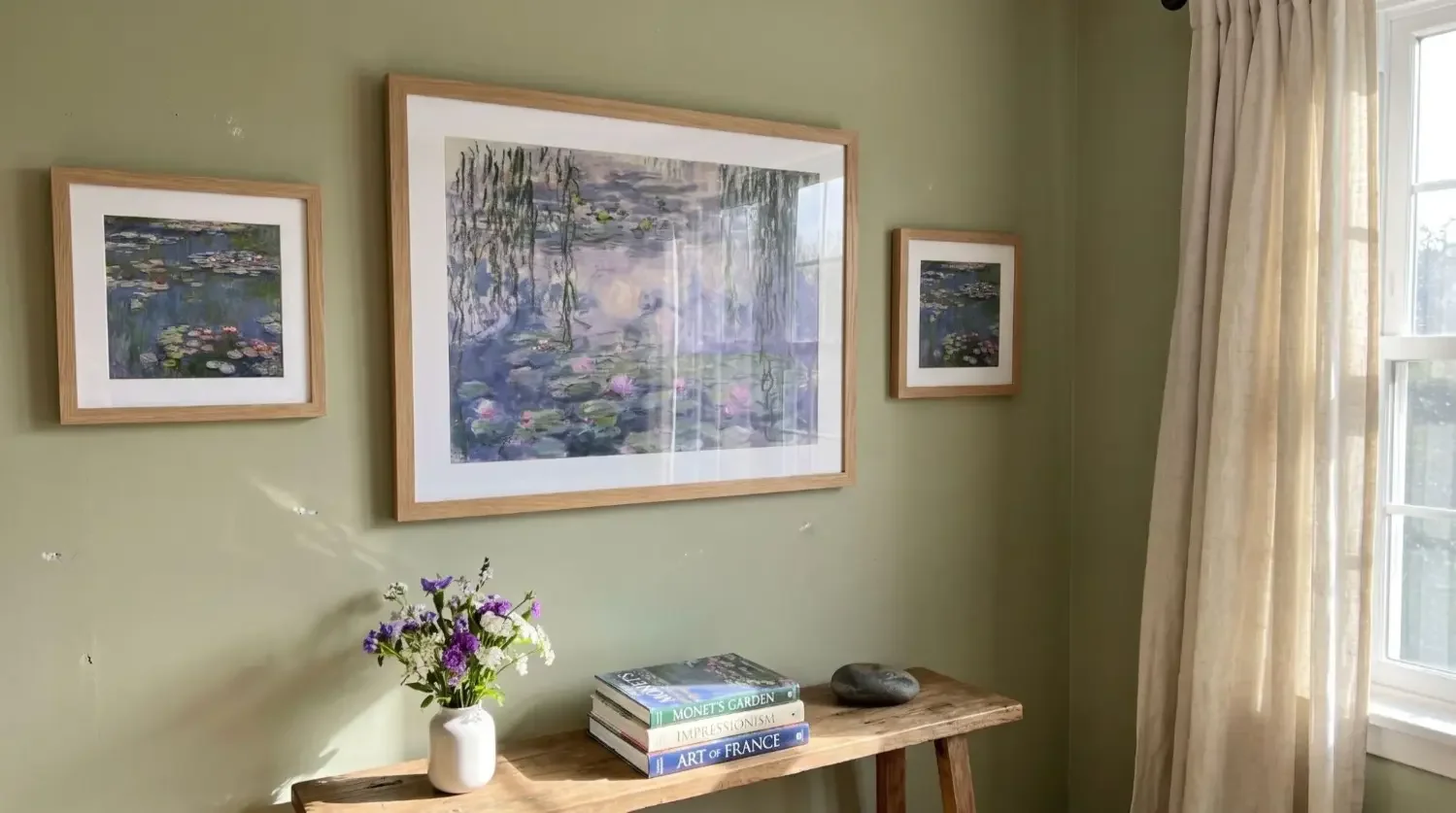
Let one larger print breathe on a wall. A muted landscape or charcoal line drawing can ground a room while keeping it airy. This is perfect in small spaces where you want serenity without visual noise.
5) Shelf-ledge simplicity
Use one or two picture ledges with a few frames, a clay vase, and a small branch. Mix sizes in the same frame color so the composition feels effortless, not busy.
6) Tone-on-tone photography
Edit personal photos to soft black-and-white or warm sepia. This trick turns everyday memories into cohesive japandi wall art that blends with natural materials like wood and linen.
How big should your Japandi wall art be?
Scale is key in Japandi style. Aim for fewer, larger-feeling pieces that relate to your furniture width. Keep centers at eye level, and maintain consistent spacing for a clean, modern look. For exact proportions by furniture type and room, see our wall art size guide.
Sizing rules that keep things balanced
Over a sofa, console, or bed, total art width should be about two thirds to three quarters of the furniture width. Hang the center of the composition around 57 to 60 inches from the floor, which suits most interiors. For different ceiling heights and sightlines, review how high to hang art on wall. For gallery grids, use equal tile sizes and consistent gaps. When unsure, size up slightly so the wall feels grounded.
|
Furniture Piece |
Typical Furniture Width |
Recommended Total Art Width |
Example With Mixtiles |
|---|---|---|---|
|
Sofa |
84 in, 213 cm |
56 to 63 in, 142 to 160 cm |
Three 20 in tiles side by side with 2 in gaps, about 64 in total width |
|
Queen Bed |
60 in, 152 cm |
40 to 45 in, 102 to 114 cm |
Triptych of 12 in tiles with 1.5 in gaps, about 39 in total width |
|
Console |
48 in, 122 cm |
32 to 36 in, 81 to 91 cm |
2×2 grid of 12 in tiles with 1.5 in gaps, about 27 in wide |
Build a calm, cohesive wall in minutes. Our classic photo tiles make it easy to create stunning wall arts. Upload your photos, choose a slim frame, and preview your layout. Then just stick, remove, and reposition your tiles without tools or damage.
How do you arrange a Japandi gallery wall the right way?
Keep layouts simple and repeat shapes or lines. Symmetry and measured spacing create serenity, while small asymmetries add organic warmth without clutter.
Layouts that always look intentional
A symmetrical grid delivers instant calm and works in living rooms and hallways, making it a timeless choice for gallery walls. Asymmetrical balance also fits the style: pair one larger piece with two smaller ones aligned on a shared edge to create quiet movement. In narrow interiors, a vertical stack draws the eye upward and keeps the footprint small.
Spacing that feels uncluttered
Measure margins once, then replicate across the composition for clean lines. Painter’s tape helps map the outline before mounting. Mixtiles Photo Tiles use gentle adhesive or magnets, so you can fine-tune spacing on the wall and move pieces until the balance feels right. On flat, painted walls they hold securely, and you can wipe frames with a dry, soft cloth for care. Renters can skip hardware with our tutorial on how to hang wall art without nails for a clean, damage free setup.
Can you mix personal photos with Japandi style?
Yes. Convert images to monochrome or soft color so your wall art collection shares one palette. Use consistent frames, avoid heavy filters, and choose subjects like nature walks, quiet cityscapes, still life with coffee or flowers, and close-up textures like wood grain or stone. Mixtiles editing tools make quick tonal tweaks so your personal photos become part of a cohesive wall art collection that reads serene.
Where should you hang Japandi wall art in each room?
Place art where it can breathe. Choose the best wall in each room, then align the composition with nearby furniture for a calm, intentional look.
Living room

Try an oversized muted landscape above the sofa, or a low, even grid to echo the sofa’s width. Layer a wool rug, light oak coffee table, and ceramic vessels to add warmth without visual noise.
Bedroom

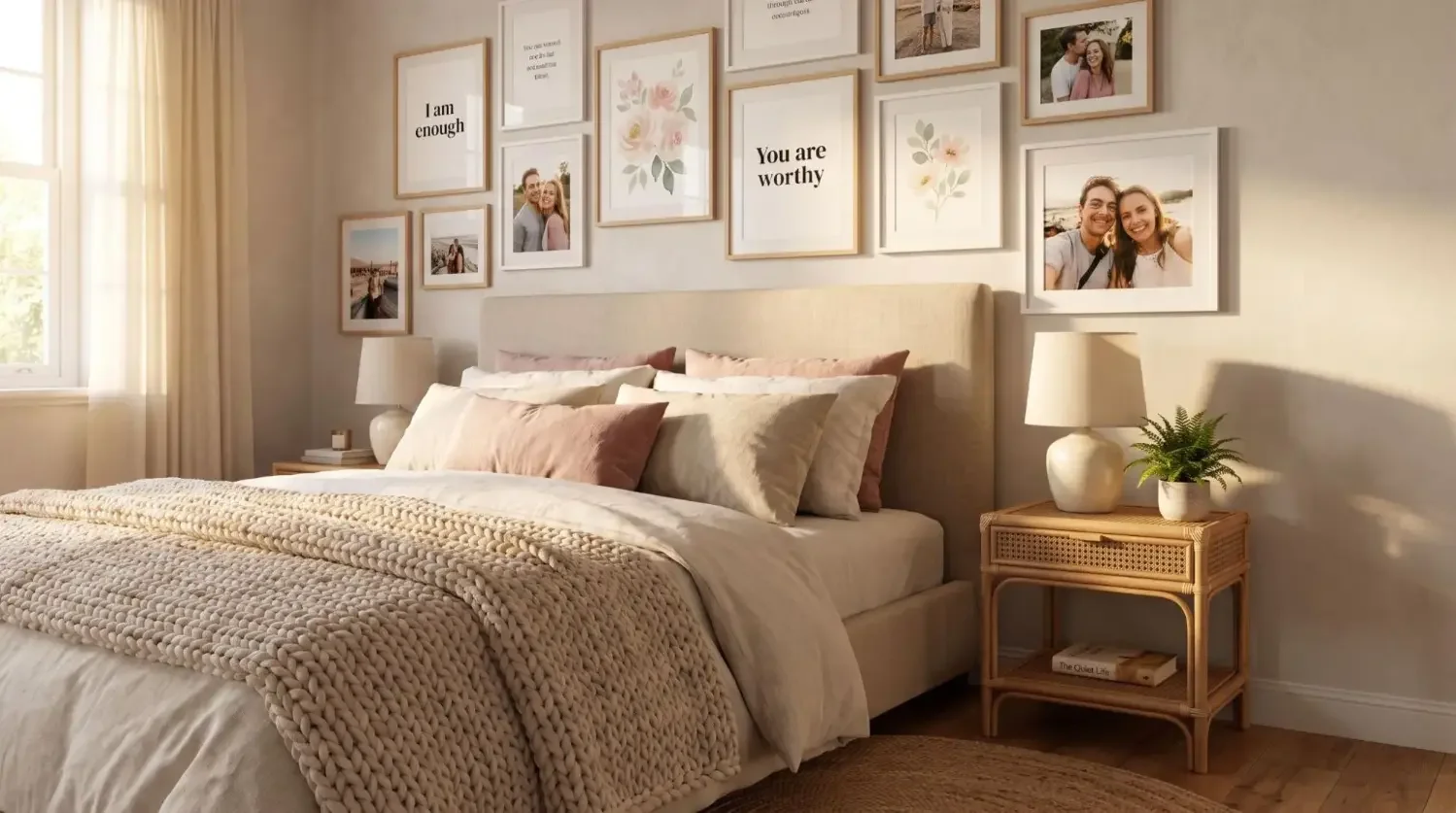
Above the headboard, a diptych of line drawings or soft abstract prints keeps the bedroom wall serene. A slim vertical pair by a dresser balances the space while staying minimal.
Entryway and hall

Use a vertical stack for height or a short linear row to guide movement. Add a clay vase with a single green branch for a natural element that feels modern and calm.
Dining and kitchen

Choose a small, cohesive series like botanicals or minimalist shapes. Keep pieces away from splatter zones, and pick wipeable finishes for practicality in busy homes.
Home office

Center a triptych or a 3×2 grid behind the desk to anchor focus. Muted color palettes reduce glare and help the room feel productive and zen.
How do you keep a Japandi wall from feeling boring?
Layer texture and subtle contrast instead of adding busy color. The result is a modern, minimalist look with warmth and depth.
Layer texture, not clutter
Combine paper, canvas, or a printed border to build dimension. On a ledge, add a linen mat, a matte ceramic, or a small woven piece for organic character without crowding.
Use subtle contrast
Balance warm wood with a slim black frame or a charcoal line drawing. Green plants like an olive tree or rubber plant add life. If you love masters like Van Gogh, choose interpretations with softened tones so the art supports the interior instead of overwhelming it.
What common mistakes should you avoid with Japandi wall decor?
Avoid these common pitfalls:
- Overfilling the wall: leave negative space as part of the composition;
- Mixing too many frame finishes: limit yourself to one or two tones for unity;
- Busy color palettes: stick to neutral tones with one quiet accent at most;
- Inconsistent spacing: use a spacer tool or painter’s tape for precision.
Japandi wall decor is about editing with care: neutral colors, natural textures, and art that invites calm. Start with a simple layout like a balanced grid or a quiet diptych, keep frames slim, and give your wall space to breathe. By choosing fewer, larger-feeling pieces and consistent spacing, you will create a home that looks serene and feels lived in. Because the best interiors evolve, use repositionable Mixtiles to keep refining your japandi wall decor ideas over time.
Ready to bring Japandi calm to your walls? Design your perfect photo gallery wall with Mixtiles today. Upload your photos, choose minimalist frames, and stick them up in minutes. No nails, no damage, and easy to rearrange anytime.
Frequently Asked Questions
What are the key principles of Japandi style?
Japandi follows seven essentials: simplicity, function first, natural materials, neutral palettes, clean lines, generous negative space, and tactile warmth. Prioritize quality over quantity, choose handcrafted or honest finishes, and let each piece breathe. The result feels calm, modern, and welcoming.
How do I start decorating my walls in Japandi style?
Start with a soft neutral base, then pick minimalist art that echoes nature. Use slim black, white, or wood frames, keep spacing consistent, and try a quiet grid or one large piece. Add texture with linen mats. Mixtiles help you plan, stick, and reposition easily.
What is the two-thirds rule for wall art sizing?
The two-thirds rule says artwork should span about two thirds of the furniture width below it. Over a sofa, aim for pieces totaling roughly 60 to 70 percent of its width. It works for single statements or gallery walls, and precision is not required.
Which wall colors best suit Japandi interiors?
Choose warm whites, beige, oatmeal, and greige for calm foundations. Layer taupe, stone, and soft gray for depth. Add muted sage, clay, or dusty blue for a quiet accent, then ground the palette with charcoal or small black details for structure and clarity.

Be the first to know — deals, news & decor ideas.
By clicking you agree to the Terms of Use & Privacy Policy