
Antique Botanical Prints: History & Display Tips
Key Takeaways
- Antique botanical prints are highly detailed plant illustrations produced primarily between the 1600s and 1900s, combining scientific precision with genuine artistic mastery;
- Legendary artists such as Pierre-Joseph Redouté, Maria Sibylla Merian, and Basilius Besler helped define this genre, and their works remain widely celebrated and collected to this day;
- These prints come in several distinct forms: engravings, hand-colored lithographs, and mezzotints, each carrying its own visual character and historical period;
- You don't need to own an original to enjoy the look: botanical-inspired gallery walls using high-quality reproductions are a stylish, accessible way to bring timeless elegance into any room.
There's something timelessly elegant about antique botanical prints. For centuries, these intricately detailed plant illustrations have graced the walls of libraries, drawing rooms, and galleries. Today, they're having a major moment in modern home décor. But what exactly are antique botanical prints, where did they come from, and how can you make them work in your own space? This guide covers everything you need to know, from their fascinating history to practical display tips.
Ready to bring a botanical-inspired photo gallery wall to life? Create your own stunning display with Mixtiles. No nails, no fuss, just beautiful results. Start designing yours today.
What Exactly Are Antique Botanical Prints?
Antique botanical prints are detailed illustrations of plants, flowers, fruits, and natural specimens produced roughly between the 1600s and the early 1900s. They sit at the crossroads of art and science, created to document the natural world with accuracy and beauty in equal measure.
More Than Just Pretty Pictures: Where Art Meets Science
Botanical prints began as scientific tools, not decorative objects. Early naturalists and explorers commissioned detailed illustrations to document and classify plant species, many of which had never been seen in Europe before. The best botanical artists combined the precision of a scientist with the eye of a painter, capturing every petal, vein, and seed pod with extraordinary care. The result was a body of work that served as both natural history record and fine art.
What Makes a Print "Antique"?
A botanical print earns the "antique" label when it was produced using period printmaking methods before the 20th century. Many were hand-colored by skilled artists after printing, meaning no two copies are quite identical. Originals from celebrated publications can fetch significant sums at auction, though high-quality reproductions are widely available and equally striking as vintage botanical wall arts.
Where Did Antique Botanical Prints Come From?
The history of botanical illustration stretches back centuries, shaped by exploration, science, and artistic ambition. Its evolution unfolded in three broad phases.
Herbals and Early Plant Catalogues (1500s–1600s)
The story begins with herbals: books cataloguing plants for their medicinal uses. As European empires expanded and encountered unfamiliar flora across Asia, the Americas, and Africa, the demand for accurate visual records grew rapidly. The goal was practical, to identify, name, and classify as much of the natural world as possible.
The Golden Age of Botanical Art (1600s–1800s)
By the 17th century, botanical illustration had evolved from documentation into a refined art form. Lavish folio volumes, some commissioned by royalty or wealthy patrons, featured exquisitely engraved and hand-painted plates. Basilius Besler's Hortus Eystettensis (1613) set a new standard for artistic ambition, showcasing over 1,000 plant engravings at monumental scale.
The Victorian Era: When Botanical Art Went Mainstream
The Victorian era brought an explosion of interest in natural history, making botanical collecting and illustration fashionable across society. It also became one of the few respectable artistic pursuits open to women, giving rise to a generation of accomplished female artists. This period produced an enormous body of vintage botanical art that still dominates the antique print market today.
Who Were the Most Famous Botanical Artists?
A handful of names consistently surface when exploring the history of botanical illustration. Here are four artists whose work truly defined the genre:
- Pierre-Joseph Redouté: Often called the "Raphael of flowers," his rose and lily paintings are among the most recognizable botanical images ever created;
- Maria Sibylla Merian: A pioneering naturalist and artist, Merian's illustrations of tropical plants and insects were revolutionary for their scientific accuracy and compositional beauty;
- Basilius Besler: Responsible for one of the most celebrated botanical folios in history, the Hortus Eystettensis, featuring over 1,000 engraved plant illustrations;
- Walter Hood Fitch: The prolific illustrator behind hundreds of plates in Curtis's Botanical Magazine, the world's longest-running botanical publication.
Love the botanical look? Mixtiles makes it easy to build a curated display with your favorite art and custom canvas prints. Reposition your 12x12 canvas prints as many times as you like until it feels just right.
What Are the Different Types of Antique Botanical Prints?
Not all antique botanical prints look or feel the same. The printmaking technique used significantly affects the visual character, texture, and collectibility of each piece. Here is a quick comparison of the three main types:
|
Print Type |
Era |
Technique |
Visual Character |
|---|---|---|---|
|
Engraving / Etching |
1600s–1800s |
Design incised into a copper plate, inked, and pressed onto paper |
Crisp, precise lines; often hand-colored with watercolor |
|
Hand-Colored Lithograph |
Early 1800s–1900s |
Limestone printing; color applied by hand with watercolor or gouache |
Smooth tonal gradations; soft, painterly quality |
|
Mezzotint / Aquatint |
1700s–1800s |
Tonal techniques using scraping or acid to build texture |
Rich shadows, luminous highlights; dramatic atmospheric depth |
Engravings and Etchings
The earliest and most common method, engraving produced the crisp, fine lines perfectly suited to botanical detail. Many prints were later enriched with hand-applied watercolor, giving each piece a subtly unique character.
Hand-Colored Lithographs
Developed in the early 19th century, lithography allowed for smoother gradations of tone. Teams of colorists applied pigment by hand, giving vintage botanical prints a warmth that feels distinctly human and personal.
Mezzotints and Aquatints
These techniques produced richer tonal ranges, with velvety shadows and glowing highlights. Dr. Robert Thornton's The Temple of Flora (1807) remains the most dramatic example, pairing botanical illustration with moody, painterly backgrounds unlike anything seen before.
Why Are Antique Botanical Prints Still So Popular Today?
Antique botanical prints endure because they strike a rare balance: detailed enough to be intellectually engaging, yet organic and beautiful enough to suit almost any interior style. Their muted palettes of sage, ivory, dusty rose, and warm ochre complement everything from cottagecore aesthetics to minimalist Scandinavian rooms. They carry a sense of history and craft that mass-produced art simply cannot replicate, lending instant character and depth to a space. If you want to explore how this genre fits into a broader decorating approach, our guide to floral art is a great place to deepen your understanding of the style and its many expressions.
How Can You Display Antique Botanical Prints at Home?
The key to displaying antique botanical prints effectively is visual cohesion. Whether you're working with originals or high-quality reproductions, a thoughtful curation approach transforms individual prints into a unified, striking display.
Building a Botanical Gallery Wall
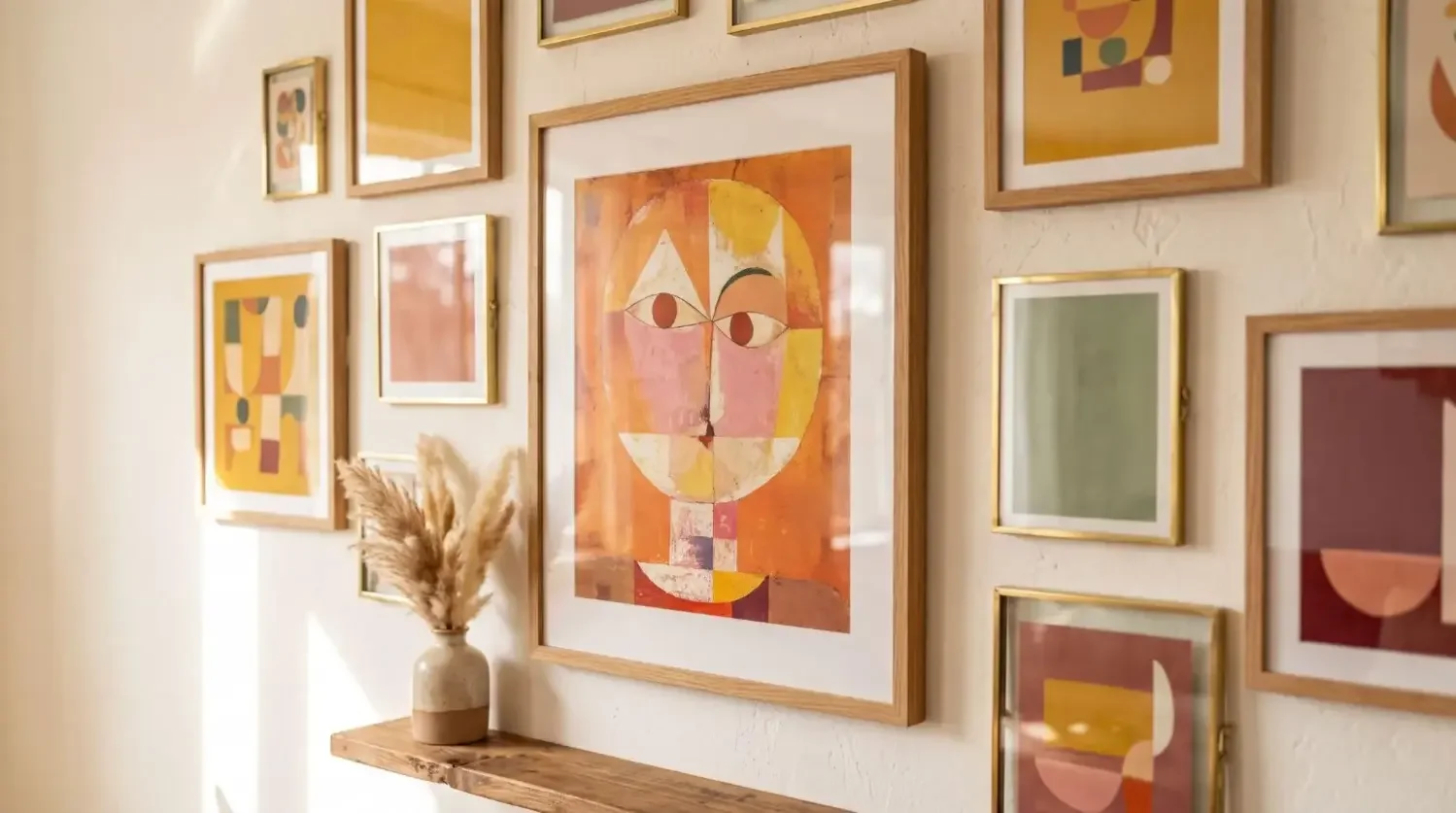
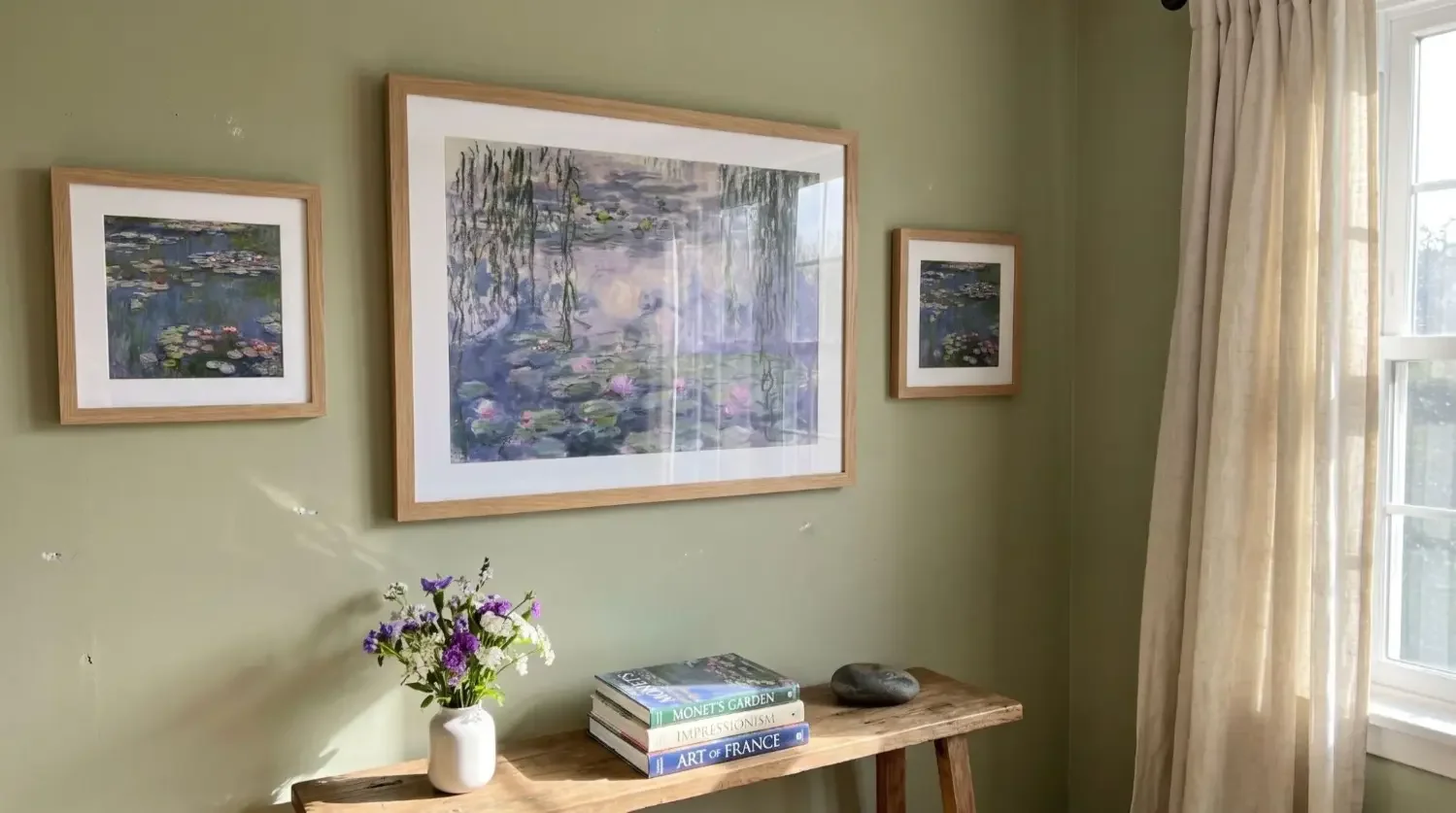
A botanical gallery wall is one of the most impactful ways to decorate a room with this style. Choose prints with a unifying thread: a consistent color palette, a shared subject such as all roses or all ferns, or illustrations from the same era. Mixing sizes adds visual dynamism, while uniform framing creates a polished, collected feel. With Mixtiles adhesive photo tiles, you can arrange and rearrange your layout freely without a single nail or mark on your walls, making it easy to achieve a look you'll truly love. For practical tips on going completely nail-free, our dedicated guide on hanging wall art without nails walks you through every method worth considering.
Room-by-Room Styling Ideas
Botanical prints work beautifully across the home. Here are four rooms where they make an especially strong impression:

Living room: A grouping of 6 to 9 prints arranged in a grid creates a museum-worthy focal point above a sofa or console table.

Kitchen or dining room: Antique fruit and vegetable botanical illustrations feel perfectly at home here, think 18th-century citrus, fig, or asparagus prints.

Bathroom: A pair of matching floral prints in identical frames instantly elevates a small space.

Hallway: A single vertical column of botanical prints draws the eye down a corridor with quiet elegance.
Do You Need an Original Print, or Are Reproductions Just as Good?
Original antique botanical prints can range from under $100 to several thousand dollars, depending on the artist, publication, and condition. For most home decorators, high-quality reproductions on canvas prints offer all the visual impact at a fraction of the cost. What matters most on a wall is the composition, the color, and the arrangement. A beautifully printed reproduction, thoughtfully displayed, is virtually indistinguishable from an original. Mixtiles Fine Art Prints bring this same spirit to your walls, pairing premium print quality with the freedom to rearrange your display whenever inspiration strikes.
Antique botanical prints are more than decorative objects. They are windows into centuries of human curiosity about the natural world, rendered with breathtaking artistry and care. Whether you're drawn to the dramatic florals of Redouté, the moody atmosphere of Thornton, or the precise elegance of Besler, there is a botanical print style to suit every home and every taste. You don't need a museum budget to make them work. With a little intention and the right display solution, a botanical-inspired gallery wall can transform any room into something truly special.
Create your own botanical-inspired display with Mixtiles photo tiles. Upload your favorite prints or photos, arrange them your way, and hang them in minutes. No nails, no commitment, no stress. Build your wall today.
Frequently Asked Questions
How can I tell if an antique botanical print is genuine?
Look for a plate mark, the slight indentation left by a copper printing plate, along with uneven hand-applied color and naturally aged paper showing foxing or toning. Visible ink texture under magnification is another good sign. Purchasing from reputable dealers and asking for provenance documentation also helps confirm authenticity.
Where is the best place to buy antique botanical prints?
Good sources include specialist print galleries, established antique dealers, and auction houses such as Christie's or Sotheby's. Online marketplaces like Etsy and eBay can also yield genuine finds, though verifying seller reputation is essential. Antique book fairs are particularly rewarding for sourcing rare and reasonably priced examples.
How should I care for and preserve antique botanical prints?
Keep prints away from direct sunlight, high humidity, and temperature fluctuations. Always use acid-free mounts and UV-protective glass when framing to prevent fading and paper degradation. Avoid touching the printed surface with bare hands. For particularly valuable originals, a professional conservator can advise on long-term preservation.
What makes an antique botanical print valuable?
Key factors include the artist or publication, overall condition, rarity of the plant depicted, and whether the color was applied by hand. Prints from celebrated works like Curtis's Botanical Magazine or Besler's Hortus Eystettensis typically command higher prices, as do examples with vivid, well-preserved hand coloring.


Be the first to know — deals, news & decor ideas.
By clicking you agree to the Terms of Use & Privacy Policy