Gallery Wall with Large Art: Create a Stunning Focal Point
Key Takeaways
- A gallery wall with large art balances one bold focal point with meaningful photos, creating a polished yet personal look;
- Choose a large piece about two thirds the width of your furniture, then build a tight grid or organic cluster around it;
- Simple rules: 57 inch eye-level center, 2 to 3 inch spacing, consistent frames, keep the mix cohesive;
- Mixtiles adhesive, repositionable frames make it easy to mock up, move, and perfect your layout without nails or damage.
Want the drama of one big statement piece without losing the personality of your photos? A gallery wall with large art blends both. A hero artwork anchors your space while smaller framed photos tell your story. In this guide, you will learn how big your large art should be, the best gallery wall layouts to copy, hanging rules that always work, and fast ways to do it with Mixtiles no-nails wall art so you can experiment freely and love the final look in any room of your home.
Start designing your photo gallery wall with large art in the Mixtiles app. Import photos, arrange, and preview on your wall in minutes.
What exactly is a gallery wall with large art?
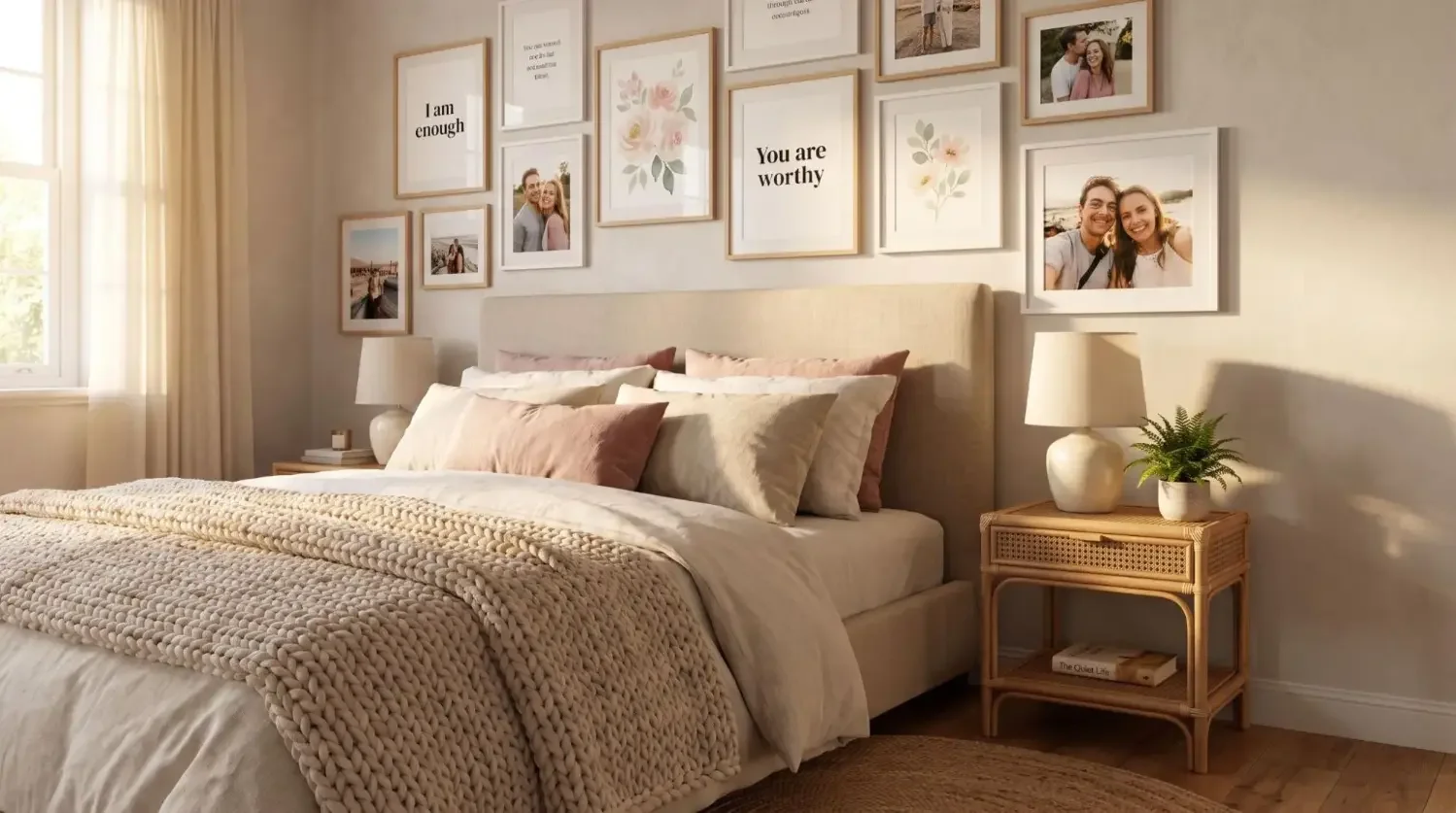
It is a gallery wall built around one oversized anchor piece. The big art creates a clear focal point, and the surrounding frames add rhythm, scale, and personal meaning. The result is clean and elevated, yet warm and lived-in. Try it above a living room sofa, over a bed, along a console, in a staircase, or as entry wall art. If you like gallery walls but want a calmer feel, this hybrid gallery wall design is a perfect match.
How big should the “large art” be for your space?
Use simple proportions. Above furniture, aim for large art that is roughly two thirds the width of the piece below. Leave breathing room at the wall edges, and center the overall arrangement at about 57 inches from the floor. If you prefer a modular look, you can simulate oversized art with a Mixtiles grid.
For deeper room-by-room guidance, see our guide on how big should art be on a wall for additional proportions and examples.
|
Setting |
Furniture Width |
Target Large Art Width |
Metric Target |
Mixtiles Option Examples |
|---|---|---|---|---|
|
Living room sofa |
72 in |
48 in |
122 cm |
One 22 × 44 in canvas, centered; or a 4 × 1 row of 12 × 12 in tiles for a ~50 in span; |
|
Queen bed |
60 in |
40 in |
102 cm |
One 27 × 36 in canvas; or a tight 3 × 1 row of 12 × 12 in tiles; |
|
Console table |
60 in |
36–40 in |
91–102 cm |
Two 20 × 20 in tiles side by side; or a 2 × 2 grid of 12 × 12 in tiles. |
If you want an even bigger look, create a statement grid using Mixtiles 12 × 12 in or 8 × 8 in canvas prints. Tight spacing and consistent frames make the grid read like one oversized piece.
Which layouts pair best with a large statement piece?
Several gallery wall layouts make the anchor art shine. Choose based on your room style and wall shape. Keep spacing consistent and align tops or midlines for an intentional finish.
Symmetrical Grid Around a Hero

Position the large art slightly off-center, then mirror a tight grid of framed tiles on the opposite side. This gallery wall layout looks crisp and modern. It suits minimal spaces and formal living rooms.
Organic Cluster + Anchor

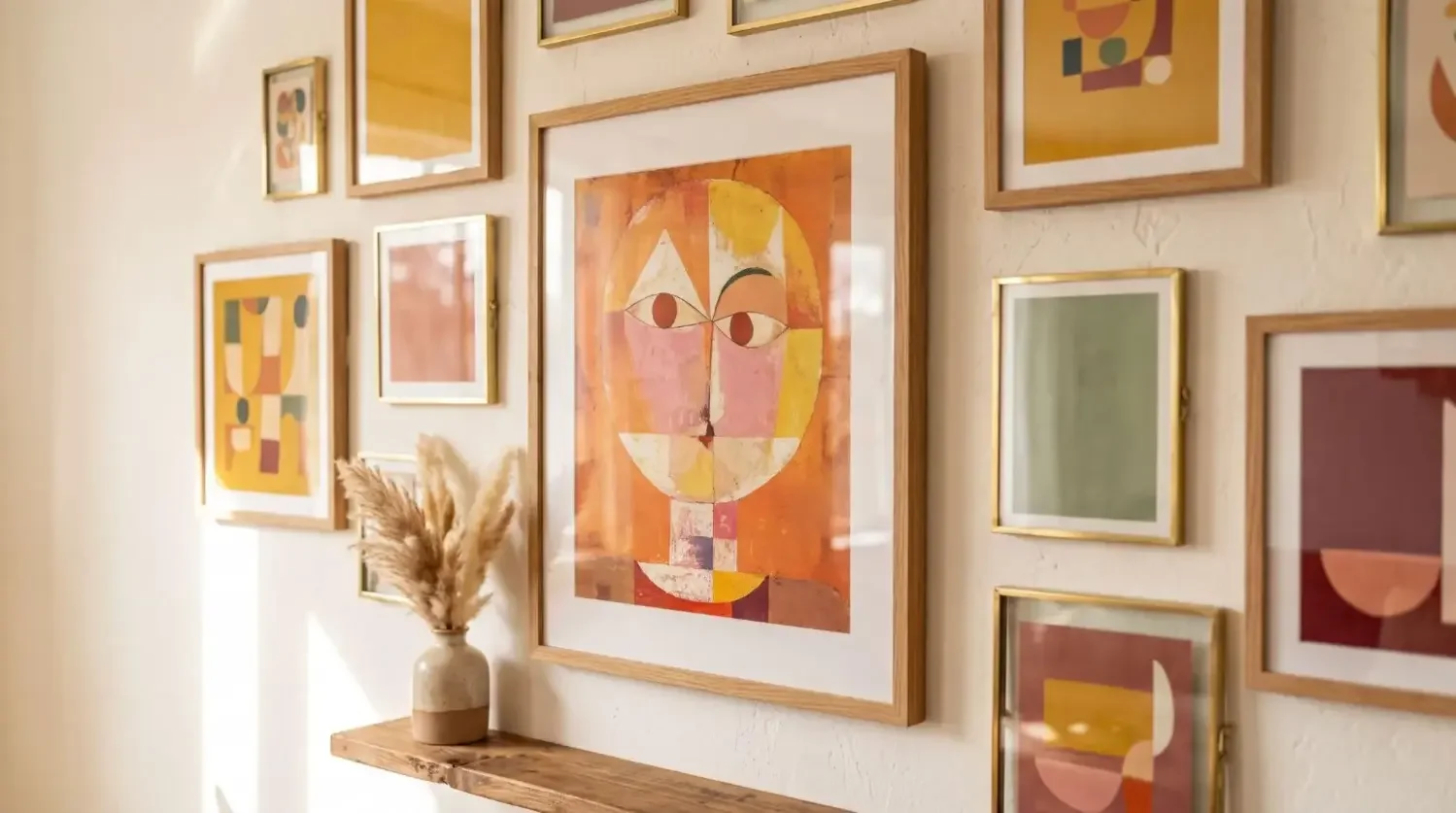
Place the big art a little off-center, then build an organic cluster that wraps it on two sides. Mix portrait and landscape frames, vary heights, and echo colors from the hero art to keep the gallery cohesive.
Triptych or Diptych + Supporting Frames

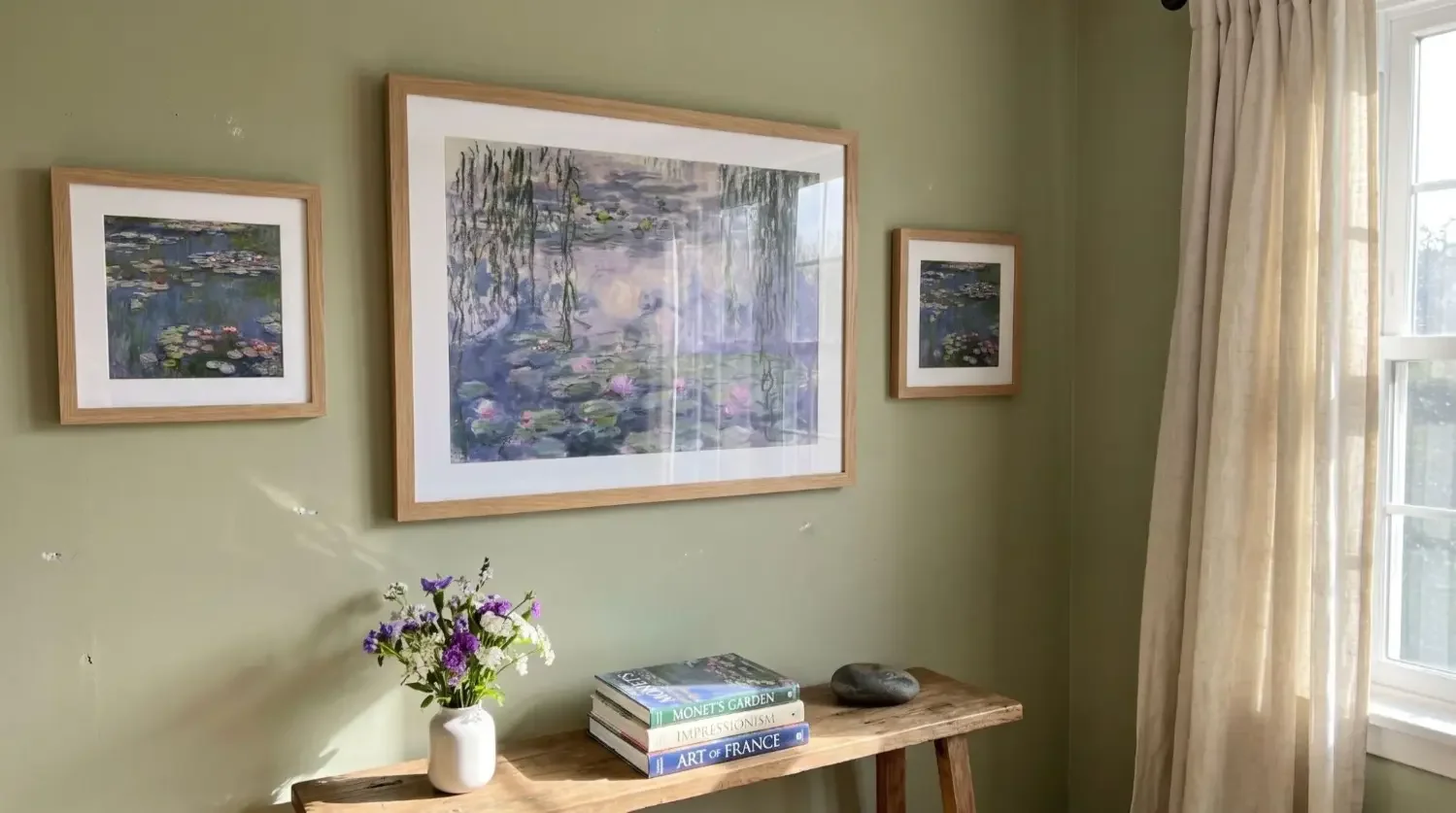
Let a diptych or triptych act as the large art, then add a neat row of smaller frames below or to one side. This is excellent for long walls and hallways where you want calm repetition.
Staircase or Vertical Column with a Statement

Use the large piece at the landing or top of the stairs, then let a diagonal line of tiles trace the incline. For tall walls, add a vertical column of frames to balance height with a strong focal point.
How do you keep the mix cohesive?
Start with a limited palette. Pull two or three hues from the large art and repeat them across your photos or printed borders. Black and white photos are a great unifier if your gallery includes different moments and places. Keep frame style and color consistent across your tiles for calm continuity. Maintain 2 to 3 inch spacing between pieces. Distribute visual weight by balancing darker images on the side opposite the anchor to avoid a lopsided look.
Use Mixtiles to test-drive layouts. Our adhesive photo tiles let you stick, step back, and re-arrange as many times as you like without damaging your walls.
What are foolproof measurements and hanging rules?
The right measurements make any gallery wall look professional. Follow these quick rules for accurate placement and repeatable results.
- Eye level: Center the overall arrangement around 57 inches from the floor for most walls;
- Above furniture: Hang 6 to 10 inches above sofas and consoles, and 8 to 12 inches above headboards;
- Alignment: Keep top lines or midlines consistent across groups, use painter’s tape and a level for grids;
- Planning: Lay frames on the floor first, snap a reference photo, then transfer to the wall in order;
- Surfaces and care: Wipe walls dry before mounting. Mixtiles hold on painted drywall, wood paneling, and more. Clean with a dry, soft cloth only.
Can you get the large-art look using Mixtiles only?
Yes! Create a statement grid that reads as one big canvas by arranging 9 to 15 picture tiles edge to edge with even spacing. Try a 3 × 3, 4 × 3, or 5 × 3 grid to scale up on wide walls. Prefer a single image? Print one hero photo across multiple tiles for a bold diptych or triptych effect. All Mixtiles are lightweight and use stick-and-restick adhesive or magnets, so you can expand or tweak your gallery without nails or tools.
Blending a gallery wall with large art gives you the best of both worlds: a striking focal point and a deeply personal story. With a few sizing rules, cohesive frames, and smart spacing, your wall will feel intentional and balanced. Mixtiles makes gallery wall layout planning easy with adhesive, repositionable frames, canvas tiles, and curated gallery wall kits. Try your arrangement, move it, live with it, then perfect it without holes or stress in your home.
Design your gallery wall with large art today. Start by choosing your statement piece from our collection of personalized canvas prints. Then, open the Mixtiles app to arrange your gallery and order frames that stick and restick without damage.
Frequently Asked Questions
What are the basic rules for a gallery wall with one large piece?
Start with a bold anchor roughly two thirds the width of the furniture below. Center the arrangement around 57 inches eye level. Hang 6 to 10 inches above sofas or consoles. Keep 2 to 3 inch gaps and consistent frames, then balance darker images opposite the anchor.
Are gallery walls with large art still in style in 2025?
Yes. Designers favor calmer, curated walls that pair one oversized artwork with a tidy grid or a small cluster of photos. Cohesive palettes, simple frames, and symmetry feel current. Use Mixtiles repositionable frames to refresh seasonally without damage, keeping the look timeless and personal.
How do I arrange a gallery wall around a large statement piece?
Choose your anchor, then pick a layout, symmetrical grid, organic cluster, or a diptych with supporting frames. Align tops or midlines, keep 2 to 3 inch spacing, and center at eye level. Mock it up on the floor or preview in the Mixtiles app, then adjust by eye.
Where should I hang oversized art for the best impact?
Place it above the room’s focal furniture, like a sofa, bed, console, or dining table, or at a stair landing. Keep it in the natural line of sight as you enter. Hang 6 to 10 inches above furniture, and leave breathing room at wall edges.

Be the first to know — deals, news & decor ideas.
By clicking you agree to the Terms of Use & Privacy Policy